
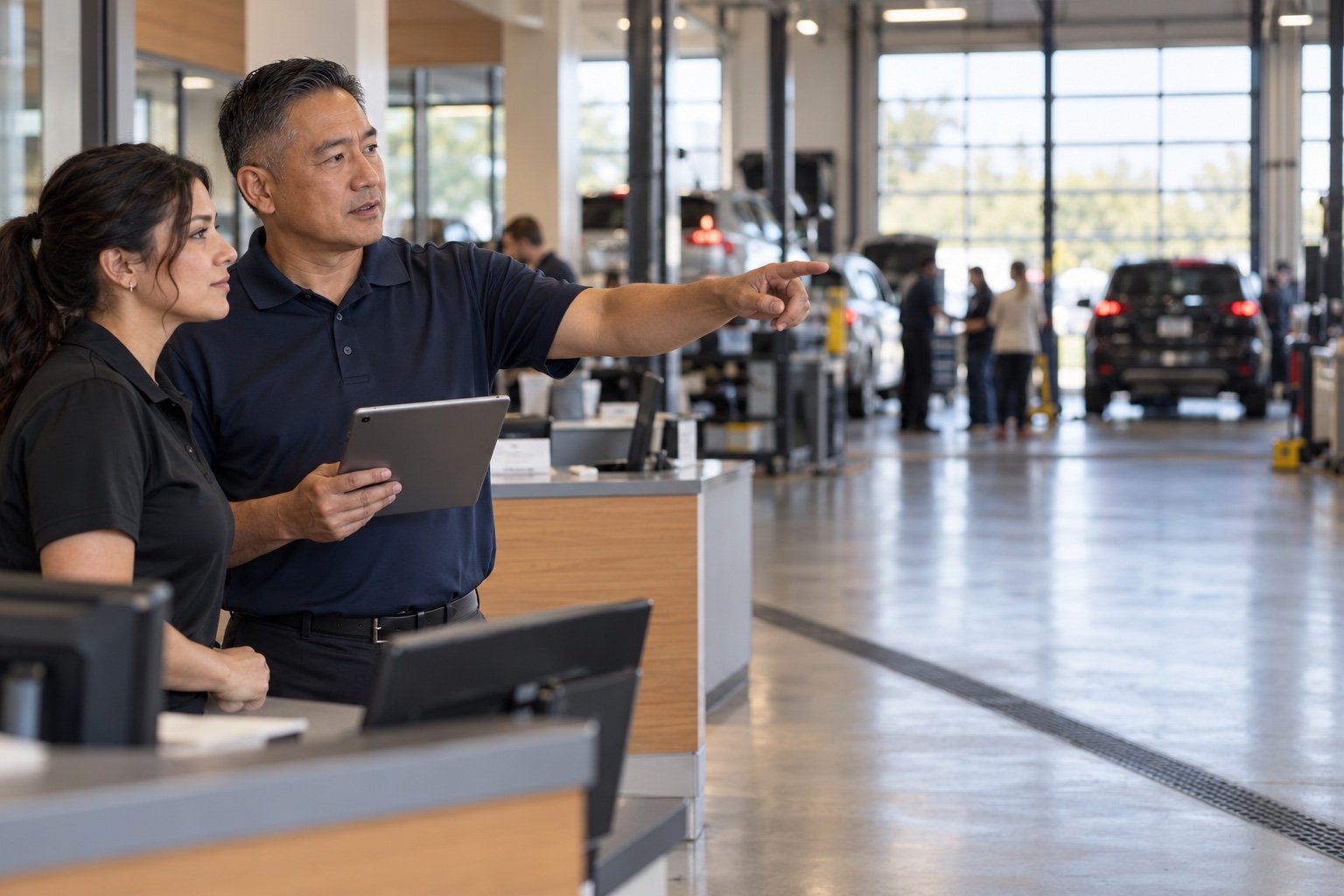
A service manager supporting an advisor on the service floor.

For Service Managers

Keep service follow-through moving.

See where customer communication needs attention, understand a concern before responding and support the advisors carrying the day.

The communication behind the service floor

Know where to step in, and what the team needs next.

Bring the queue, the customer’s experience and your operating standards into the same management conversation.

Today’s follow-through

Bring an aging visit back to the right person.

The work
A visit stays open while the team waits for information and handles new arrivals.
How Blink helps
Use the defined extended-RO reminder and review the customer conversation with the responsible advisor.
What you gain
Know who needs to check the visit and give the customer a current update.
Playbooks and eHub

See which responses need a hand.

The work
A busy service drive makes overdue or unassigned customer conversations difficult to spot.
How Blink helps
Filter Live Monitor to the service department and review conversation workload, ownership and response status.
What you gain
Choose where an advisor needs help before sending another request for an update.
Live Monitor

People and customer care

Understand the concern before making the call.

The work
Poor feedback arrives while you are still piecing together what happened during the visit.
How Blink helps
Review the rating, comment and linked visit; use the defined apology and context-rich manager alert for recovery.
What you gain
Spend the personal response addressing the issue rather than asking for the story again.
Service Feedback and eHub

Coach the conversation behind the response time.

The work
A fast reply can still leave the customer unsure about what happens next.
How Blink helps
Read the conversation alongside response patterns and discuss the advisor’s next action.
What you gain
Give feedback tied to a customer situation the advisor recognizes.
Engagement analytics and conversation history

Standards beyond one visit

Decide what deserves the manager’s attention.

The work
Different teams can treat the same delay or concern differently.
How Blink helps
Set the relevant department escalation and response expectations, then review how conversations reach the responsible person.
What you gain
Make your standard for attention clear to the team.
Escalation and response settings

Give the next department the reason for the handoff.

The work
A customer question moves between service, parts or sales while its context gets lost.
How Blink helps
Use private notes, mentions and conversation ownership to bring the right teammate into the discussion.
What you gain
Keep responsibility and the customer’s reason for contact together.
Private notes and team assignment

Make the next visit part of the operation.

The work
Due service, declined recommendations and missed visits compete with the work already on the drive.
How Blink helps
Coordinate the appropriate Outreach follow-up and booking path with the team handling customer replies.
What you gain
Give returning customers a clear route back and your people a prepared conversation.
Outreach and Scheduling

Lead the operation with clear ownership

  • Your team owns the personal response.

    Context and alerts bring a concern into view. You decide the service recovery and the coaching it needs.

  • Store standards guide the routine.

    Define the automatic message, the advisor task and the manager handoff for each customer situation.

  • Keep the operational picture complete.

    Use communication evidence alongside your existing shop, parts and business reporting when deciding what to change.

Your dealership, your next step

Bring a service day that needs better follow-through.

Review an overdue response, a customer concern and the handoff your team needs to handle well.

Talk to Us
BLiNK AI

Customer engagement for dealerships. People and AI, working together.